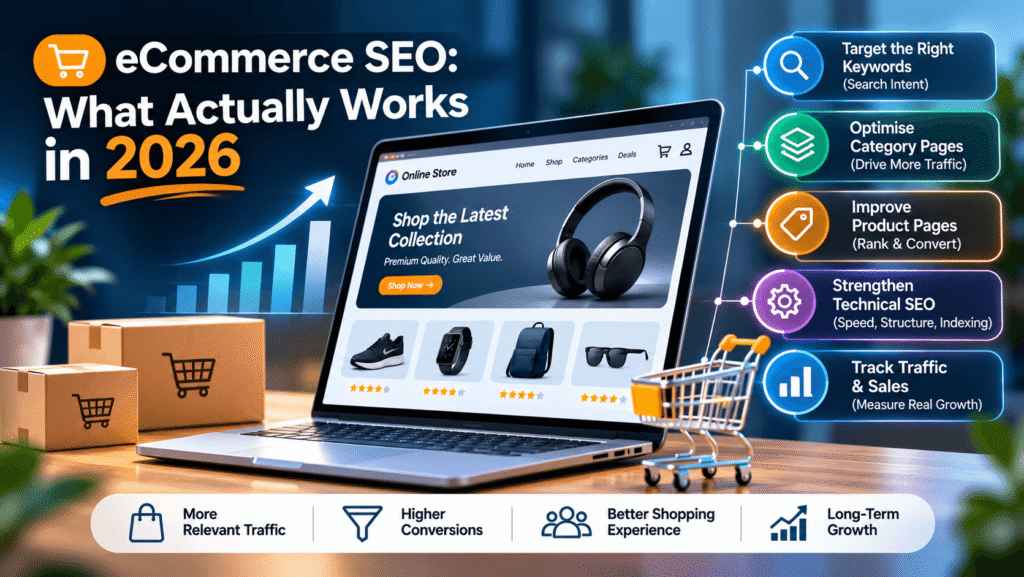
Having great products is not enough to make an online store stand out in search results. In 2026, successful eCommerce SEO depends on targeting the right search terms, creating well-optimised category and product pages, improving technical performance, building customer trust and making product information accessible across traditional and AI-powered search platforms. These strategies help online stores attract shoppers with genuine buying intent, strengthen search visibility and turn relevant visits into sales.
At Innosoft Works, we understand that every online store has different products, customers and business requirements. We focus on identifying optimisation opportunities, addressing website challenges and developing practical solutions that support your store’s long-term growth. Our goal is to help eCommerce businesses create a smoother shopping experience while building a stronger foundation for their digital presence.
What Actually Works in eCommerce SEO in 2026?
In 2026, eCommerce success depends on combining relevant content, strong technical foundations and a seamless shopping experience to attract the right customers and drive sales.
Focus on Search Intent and Buying Keywords
Keyword research should begin with understanding what potential buyers want to find. Some people search for product ideas and comparisons, while others are ready to make a purchase. Targeting these different search intentions helps match relevant terms with the right pages. For instance, “best running shoes” suggests that someone is comparing options, whereas “buy Nike running shoes size 9” indicates a stronger intention to purchase.
Prioritise Category and Collection Pages
Category and collection pages organise related products, making it easier for shoppers to browse available options. They also provide opportunities to target broader commercial searches. Use descriptive headings, useful introductory text and relevant internal links to guide visitors through each section. Make sure every category offers a clear purpose instead of creating multiple pages with almost identical content.
Improve Product Pages for Search and Conversions
Effective eCommerce Product Page SEO helps online stores make individual product listings more useful and visible in search results. Write original descriptions that explain key features, specifications and benefits. Include high-quality images, accurate pricing, delivery information and genuine customer reviews. These details help visitors understand the product while giving search engines clearer information about what each page offers.
Strengthen Technical SEO and Website Performance
A clear website structure helps search engines discover and understand important content. Review internal linking, mobile usability, loading speed and indexing settings to identify technical issues. Pay attention to broken links, duplicate URLs and unnecessary pages that could waste crawl resources. A technically sound store also makes browsing easier and supports a smoother shopping experience.
Measure Organic Traffic, Leads and Sales
Track whether search activity is contributing to meaningful business outcomes. Use Google Search Console to review impressions, clicks and search queries, while Google Analytics 4 can help monitor user behaviour, purchases and revenue. Compare the performance of different landing pages to identify which areas attract valuable visitors. These insights make it easier to decide where further improvements are needed.
Why Category Pages Are a Major eCommerce SEO Opportunity?
Category pages help online stores attract shoppers who are exploring a particular range of products. By bringing related items together, these pages provide an opportunity to target broader commercial searches and introduce visitors to different options. A well-organised category page can guide potential buyers towards products that match their needs and make browsing more convenient.
Target Broad Commercial Searches
Shoppers often use general search terms when they have not decided on a specific product. For example, someone searching for “women’s running shoes” may want to compare different brands, designs and price ranges. A relevant category page can meet this need by displaying suitable options in one place. This allows online stores to reach potential customers while they are still considering their choices.
Create Helpful Category and Collection Content
A category page should offer more than a simple product listing. Include a short introduction explaining what the collection contains and what makes its products relevant. Depending on the category, you can also add useful buying advice, comparisons or information about key features. Keep the content specific and informative so visitors can make better purchasing decisions.
Connect Category Pages with Relevant Products
Use clear, descriptive links to connect category pages with relevant product listings. You can also include links to buying guides when they provide additional information about a particular product range. A well-planned linking structure helps shoppers discover suitable items and gives search engines a clearer understanding of how different sections of the store are connected.
Prevent Thin Content and Keyword Cannibalisation
Creating multiple category pages with almost identical content can make it difficult for each page to offer unique value. It may also cause similar pages to compete for the same search terms. Review the purpose and content of each category before adding new sections. If two pages target the same products and search intent, consider combining them or making their focus more distinct. This helps maintain a useful and well-organised store structure.
Technical SEO and Site Architecture for Online Stores
A successful online store needs a strong technical foundation to maintain its visibility in search results. Its structure should allow search engines to discover important pages, understand their relationships and access relevant information efficiently. Poor technical settings can create barriers that limit how effectively a website is explored and indexed.
As an online shop expands, managing hundreds or thousands of product URLs requires careful planning. Enterprise eCommerce SEO Solutions can help larger stores manage complex website structures, address technical challenges and maintain search visibility across extensive product catalogues. Regular technical audits also help identify unnecessary URLs, poorly organised navigation and incorrect settings that could affect website performance.
How AI Search and GEO Are Changing eCommerce SEO
AI-powered search is changing how shoppers discover and compare products online. Whether businesses work with an eCommerce SEO Agency NYC or manage optimisation internally, adapting to these changes is becoming increasingly important. People can now ask AI tools for product suggestions, feature comparisons and personalised recommendations instead of relying only on traditional search results. Online stores need to make their information useful, trustworthy and easy for AI platforms to interpret. Generative Engine Optimisation (GEO) can help businesses improve their visibility in these experiences through the following practices:
- Answer Specific Buying Questions: Provide clear answers to common questions about product features, uses, suitability and comparisons.
- Create Detailed Comparison Content: Publish helpful comparisons that explain the differences between products, brands and available options.
- Strengthen Brand Authority: Earn relevant mentions and references from reputable websites, industry publications and trusted sources.
- Share Reliable Brand Information: Make business details, product expertise and important company information easy to find and verify.
- Monitor AI Search Visibility: Track brand mentions, AI-driven referrals and changes in how customers discover your products through AI platforms.
Inventory Management for Better eCommerce SEO
Inventory management plays an important role in maintaining a reliable shopping experience and protecting the value of product pages. When stock levels change, online stores need to ensure that customers receive accurate information about product availability. Clear stock updates help shoppers make informed decisions and prevent frustration caused by ordering items that are no longer available.
For temporarily unavailable products, keeping the original page live can preserve its existing search value and give customers the option to check back later. If an item is permanently discontinued, redirecting its URL to a relevant alternative can help visitors find a suitable replacement. Managing these changes carefully also reduces broken links and keeps the store organised as its product range evolves.
Choosing the Right eCommerce SEO Platform
Choosing an eCommerce platform involves more than selecting a design or setting up an online shop. When comparing the Best eCommerce SEO Platforms 2025, businesses should consider SEO-friendly features that make it easier to manage page URLs, customise metadata, organise website content and integrate essential tools. These capabilities give businesses greater control over how their stores appear in search results and support effective optimisation.
As your business grows, your platform should be able to handle a larger product catalogue, increased website traffic and changing business requirements. Consider its flexibility, available integrations and ongoing support before making a decision. A platform that fits your current needs while allowing room for expansion can make long-term eCommerce management more practical.
Building an Effective Shopify SEO Strategy
A Shopify SEO Strategy 2025 provides a useful reference for understanding optimisation practices used in the previous year, but stores in 2026 should continue adapting to current search requirements. Shopify provides several built-in features that can support search visibility, but getting the best results requires the right setup and ongoing management. Focus on using the platform’s tools effectively, publishing useful content and keeping important website settings organised. The following practices can help:
- Set Up Google Search Console: Verify your Shopify domain and check your XML sitemap to help Google discover your store’s pages.
- Use Shopify’s Blogging Features: Publish buying guides, product comparisons and industry-related articles to reach shoppers researching their options.
- Manage URL Changes with Redirects: When changing product or page URLs, create appropriate redirects so existing visitors and search engines can reach the updated pages.
- Choose Apps Carefully: Install only the Shopify apps your store genuinely needs. Review their functionality and compatibility before adding them to your website.
- Review Store Performance Regularly: Check search visibility and organic traffic to identify opportunities for improving your Shopify store over time.
When to Hire an eCommerce SEO Specialist
Measuring eCommerce SEO performance helps businesses understand whether their optimisation efforts are contributing to meaningful results. Review organic conversions, revenue and the performance of important landing pages to see how search visibility translates into business outcomes. Comparing these results over time can reveal successful strategies, highlight areas for improvement and help businesses make informed decisions about future SEO investments.
Choosing to Hire eCommerce SEO Specialist support can be valuable when your internal team lacks the time or expertise to manage ongoing SEO requirements. Whether you operate a growing Shopify store or a large online marketplace, an experienced professional can provide focused guidance and help you make informed decisions. This allows your team to concentrate on daily business operations while your SEO efforts receive the attention they need.
FAQs
1. How Long Does eCommerce SEO Take to Show Results?
eCommerce SEO is a long-term process, and results depend on website quality, competition and the optimisation work involved. Some improvements may become noticeable within a few months, while stronger organic growth can take six to twelve months or longer.
2. Can eCommerce SEO Increase Online Sales?
Yes. eCommerce SEO helps attract shoppers who are actively searching for products. By improving search visibility and reaching people with relevant buying intent, online stores can create more opportunities to generate sales.
3. Is eCommerce SEO Better Than Paid Advertising?
SEO and paid advertising serve different purposes. SEO helps build long-term organic visibility, while paid ads can attract visitors more quickly. Using both strategies together can support short-term marketing goals and sustainable growth.
4. Does the Choice of eCommerce Platform Affect SEO?
Yes. An eCommerce platform can influence how easily you manage URLs, metadata, website structure and technical settings. Choosing a platform with flexible SEO features makes it easier to optimise your store as your business grows.
5. Is eCommerce SEO Worth Investing in for Small Businesses?
Yes. It can help small businesses reach relevant customers through organic search without paying for every website visit. Although SEO requires time and consistent effort, it can support long-term visibility and business growth.
Drive eCommerce Growth with SEO
Strong eCommerce SEO brings together relevant content, a well-structured website and a smooth shopping experience. By adapting to changing search trends and customer needs, businesses can improve their online visibility and attract shoppers with genuine buying intent. Consistent optimisation, useful product information and regular performance reviews help online stores stay competitive, build customer trust and create more opportunities for sustainable growth.
Ready to strengthen your online store’s search visibility? Partner with Innosoft Works to build an effective eCommerce SEO strategy.
Leave a Reply