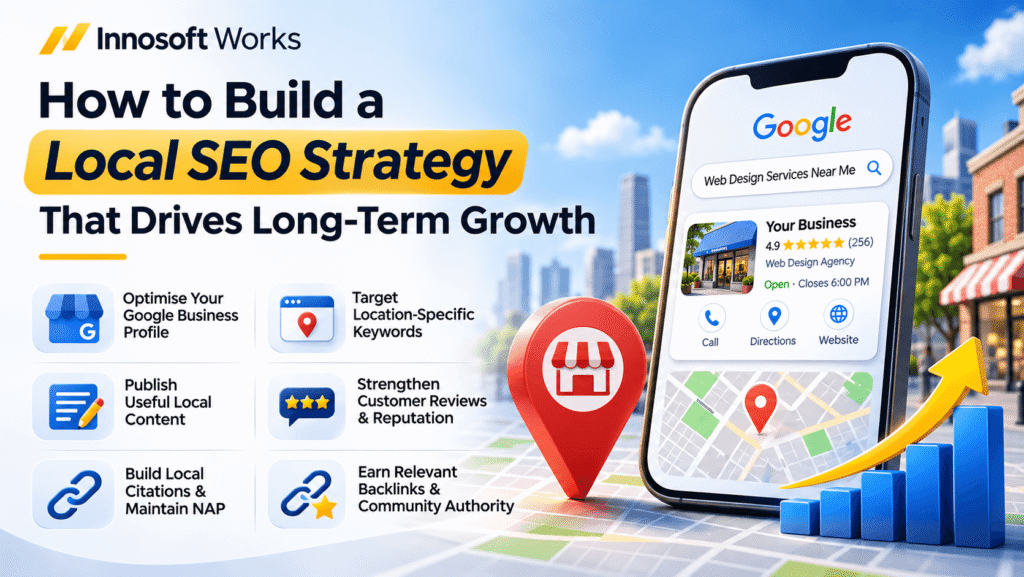
Local search connects businesses with people actively looking for nearby products and services. A successful strategy involves optimising Google Business Profile, targeting location-specific keywords, publishing useful content, maintaining accurate business listings, earning customer reviews, and securing relevant backlinks. These efforts help businesses attract qualified leads, establish credibility, and achieve sustainable growth.
At Innosoft Works, we help businesses develop effective SEO strategies through tailored solutions that align with their goals and target audiences. Our approach focuses on improving website performance, strengthening search foundations, and creating meaningful digital experiences that support steady business growth.
The Key Elements Behind Local SEO
Local search engine optimisation helps search engines connect a user’s query with businesses that match their needs and location. When someone searches for a service nearby, search engines consider several signals to identify relevant results. These include the accuracy of business information, the connection between a website and the search query, and the strength of a business’s online presence. Each element contributes to how a business is represented in local search results.
A clear local SEO foundation also requires knowing how different search signals work together. Website relevance, business information, customer feedback, and local references all provide useful context about a business. When these elements are managed consistently, search engines can better interpret what a business offers and which local searches it may be suitable for. This creates a more organised approach to local search optimisation.
Optimise Your Google Business Profile for Local Visibility
A well-maintained Google Business Profile gives potential customers a useful first look at your business before they visit your website or make contact. Its presentation can influence how people perceive your business, from the services you offer to the information they need when deciding whether to choose you. A complete and professional profile makes it easier for customers to assess whether your business meets their requirements.
Beyond its basic details, your profile should reflect what makes your business relevant to its local audience. Clear service descriptions, helpful updates, and genuine images can give people a better idea of what to expect. Keeping this information current also helps avoid confusion and creates a more reliable experience for anyone discovering your business through Google.
Build a Website That Connects with Local Customers
A well-structured website makes it easier for local customers to find relevant information, explore your services, and take the next step with confidence.
Create Dedicated Pages for Your Services and Locations
Give each major service its own page so visitors can find relevant information without searching through unrelated content. If your business serves multiple areas, create dedicated location pages that explain the services available in each place. This makes your website more useful for people exploring local options.
Use Local Keywords Where They Matter Most
Choose search terms that reflect how people describe your services and the areas they want to find them in. Include these phrases naturally in page titles, headings, descriptions, and relevant content. Avoid forcing location names into every sentence, as the wording should remain natural and helpful.
Make Every Page Easy to Navigate
Organise your website with clear menus, descriptive headings, and relevant internal links. Visitors should be able to move between service pages, location information, and contact details without confusion. A logical structure also helps search engines discover how different pages relate to one another.
Improve Mobile Performance and Loading Speed
Many local searches happen on mobile devices, so your website needs to work smoothly on smaller screens. Use responsive layouts, compress large images, and reduce unnecessary elements that slow down loading. A fast, easy-to-use website allows visitors to access important information without frustration.
Add Local Business Schema Markup
Structured data gives search engines additional context about your business and its website. Local business schema can describe details such as your business type, address, contact information, and opening hours. When implemented correctly, it can help search engines interpret these details more accurately.
Strengthen Customer Reviews and Online Reputation
Customer reviews offer valuable insight into how people experience a business. Before making a decision, potential customers often look at feedback to learn about service quality, reliability, and how a business treats its clients. A strong online reputation is built through genuine customer experiences rather than promotional claims, making honest feedback an important part of local SEO.
Managing reviews should be an ongoing part of your business practices. Give customers simple ways to share their experiences, respond thoughtfully to their comments, and pay attention to recurring feedback. Whether a review is positive or highlights an issue, a professional response shows that customer opinions are taken seriously. Over time, this approach can help businesses build stronger customer relationships and maintain a credible online reputation.
Build Local Citations and Maintain NAP Consistency
Local citations help establish a clear digital footprint by mentioning your business across trusted directories, industry websites, and relevant online platforms. These references provide additional context about where your business operates and how customers can contact you. Being listed in suitable places also creates more opportunities for people to discover your business beyond search engines.
Accuracy is just as important as visibility. Your business name, address, and phone number (NAP) should remain consistent across every listing. Even small differences, outdated contact details, or duplicate profiles can create confusion for customers and make business information harder to interpret. Review your listings regularly, correct any discrepancies, and remove outdated entries to maintain a reliable online presence.
Earn Local Backlinks and Establish Community Authority
Building relationships with trusted local organisations and earning relevant backlinks can strengthen your website’s authority and expand its reach within the community.
Build Partnerships with Complementary Local Businesses
Connect with businesses that serve a similar audience without directly competing with your services. These relationships can create opportunities for joint projects, useful recommendations, and relevant mentions on their websites. For example, a local web designer could collaborate with a branding agency on a shared resource for small businesses.
Support Community Events and Local Initiatives
Getting involved in community activities can introduce your business to organisations and groups in your area. Consider supporting local events, business associations, educational programmes, or charitable initiatives. When organisers acknowledge your contribution on their websites, these mentions may also create valuable backlink opportunities.
Create Resources That Local Websites Want to Reference
Develop original content that offers practical value to people in your service area. Local industry insights, regional business guides, useful statistics, and community-focused resources can give other websites a reason to reference your work. Prioritise information that answers a genuine need rather than creating pages solely to attract links.
Gain Backlinks from Relevant and Trusted Websites
Focus on earning links from established websites that have a genuine connection to your industry or location. Relevant local publications, professional associations, business networks, and industry platforms can be useful sources. A smaller number of meaningful backlinks can be more valuable than a large collection of unrelated links.
Adapt Your Local SEO Strategy for AI-Powered Search
AI-powered search is changing how people discover local businesses by presenting information in more conversational and context-based ways. Instead of relying only on traditional lists of links, platforms such as Google AI Overviews can bring together information from multiple sources to respond to a user’s query. This shift makes it important for businesses to provide useful, clearly organised information that directly reflects their services, expertise, and local relevance.
To prepare for these changing search experiences, focus on answering specific customer questions with accurate and informative content. Explain your services clearly, include relevant details about the areas you serve, and support important claims with reliable information. A consistent brand identity and well-connected online presence can also help AI systems interpret your business more accurately. The goal is to make your information genuinely useful wherever potential customers search.
Track Local SEO Performance and Refine Your Strategy
A local SEO strategy needs regular performance checks to determine whether it is reaching the right audience and contributing to business objectives. Tracking meaningful data helps identify which activities are producing results, where improvements are needed, and whether your priorities should change. Rather than focusing on rankings alone, consider how people interact with your business after finding it through local search.
- Monitor Organic Traffic and Search Impressions: Use Google Search Console to review how often your website appears in search results, which queries attract impressions, and how many visitors click through to your pages. These insights can reveal opportunities to improve underperforming content.
- Measure Google Maps and Map Pack Visibility: Check how frequently your business appears for relevant local searches. Compare visibility across important service areas to identify locations where your business has a stronger presence and where further optimisation may be needed.
- Track Customer Actions and Enquiries: Monitor valuable actions such as phone calls, website visits, contact form submissions, and direction requests. These measurements help show whether search visibility is translating into genuine interest from potential customers.
- Use Analytics to Identify Opportunities: Google Analytics can help you examine visitor behaviour, traffic sources, and website conversions. Review this information alongside Search Console data to understand how people discover your website and what they do after arriving.
Follow a Local SEO Checklist for Sustainable Results
A well-planned local SEO checklist 2024 helps businesses keep essential optimisation tasks organised and ensures important details are not overlooked. It provides a practical way to review key areas of your online presence and maintain a clear direction as your business develops.
Set a suitable schedule for checking these areas and assign responsibility for completing each task. Prioritise updates based on your business needs, address any gaps you identify, and adjust your actions when your goals or services change. This makes local SEO management more structured and easier to maintain over time.
FAQs
1. How Long Does It Take to See Results from Local SEO?
Local SEO usually takes several months to show noticeable results. The timeframe depends on competition, website condition, location, and optimisation efforts.
2. Can a Business Rank in Local Search Without a Physical Storefront?
Yes. Service-area businesses can appear in local search results without a physical storefront by creating an eligible Google Business Profile and defining their service areas.
3. What Is the Difference Between Local SEO and Traditional SEO?
Local SEO targets customers searching within specific areas, while traditional SEO focuses on broader search visibility without a location-specific focus.
4. Can Local SEO Help Businesses Reach Customers in Multiple Locations?
Yes. Businesses can create dedicated location pages with relevant service details to attract customers from different areas.
5. Is Local SEO Enough, or Should Businesses Also Invest in Local Search Ads?
Both can work together. Local SEO builds organic visibility over time, while paid ads provide additional exposure for targeted searches.
Grow Through Local Search
A successful local SEO strategy brings together relevant website content, accurate business information, genuine customer feedback, and strong online connections. Businesses looking to hire a local SEO agency can benefit from professional guidance in adapting to changing search trends and improving their digital presence. Consistent efforts can help attract potential customers and turn local search opportunities into meaningful business growth.
Take your local search performance further with tailored SEO solutions from Innosoft Works.
Leave a Reply